

September 23, 2026·6 min read
What license do I need to rent a salon suite or booth in Texas?
The quick answer
What license do I need to rent a salon suite or booth in Texas?
In Texas, every beauty pro needs their own TDLR cosmetology or barbering license. A walled suite needs one more license; an open chair does not.
- Every beauty pro needs an active Texas cosmetology or barbering license, $50, valid two years, per TDLR.
- A walled suite needs its own $70 Mini-Establishment license too, valid two years, per TDLR.
- An open chair needs no second state license today, per TDLR’s own current license list.
- The building itself carries a separate $78 establishment license, per TDLR.
Every beauty pro I know asks this the same way: “wait, do I need ANOTHER license just to rent a chair?” The honest answer comes down to one thing, and that’s whether your space has a door. How fancy it is doesn’t change a thing.
The short version is in the box above. Here’s the long version, straight from TDLR and the Texas Comptroller, and we opened both of their pages today.
Who this is for, and who should wait
This one’s for you if you’re a licensed, or about-to-be-licensed, Texas hair, nail, esthetics or lash pro comparing an open chair to a private suite. Still a cosmetology or barbering student with no TDLR license yet? Get licensed first, then come back to this page. It’s Texas-only too, since licensing rules for renting a chair vary by state, so if you’re reading this from somewhere else, check your own state board instead.
Do I need my own license to rent a chair or a suite in Texas?
Yes, you need your own license every time, with no exceptions.
Every beauty pro who touches a paying client here needs an active TDLR cosmetology or barbering license, whether you’re on commission, renting an open chair or leasing a private suite. Getting one means completing 1,000 hours at a licensed school, passing a written and a practical exam, being at least 17 and passing a background check, per TDLR’s Cosmetology Operator license page. The license runs $50 and is valid two years, per that same TDLR page, and barbers apply for the equivalent Class A Barber license through the same agency.
This exact question came up on one of my Module 1 calls, when a stylist asked whether they needed a separate business license in Texas. My answer started right here, with the license they already had.
What’s the difference between an open chair and a private suite, licensing-wise?
The whole difference is a wall, meaning whether your space has a door and walls of its own inside a licensed salon. If it does, TDLR calls it a Mini-Establishment, and it needs its own license on top of your individual one: $70, valid two years, per TDLR’s Mini-Establishment FAQ. Either you, as the renter, or the building owner can hold that license, since TDLR lets either party apply.
I’ve worked in a lot of commission and rental salons over twenty years in this industry, so here’s my advice. Ask which one you’re actually being shown before you fall for the room, since a walled suite and an open chair get pitched with the same warm words, and only one of them costs you a second license.
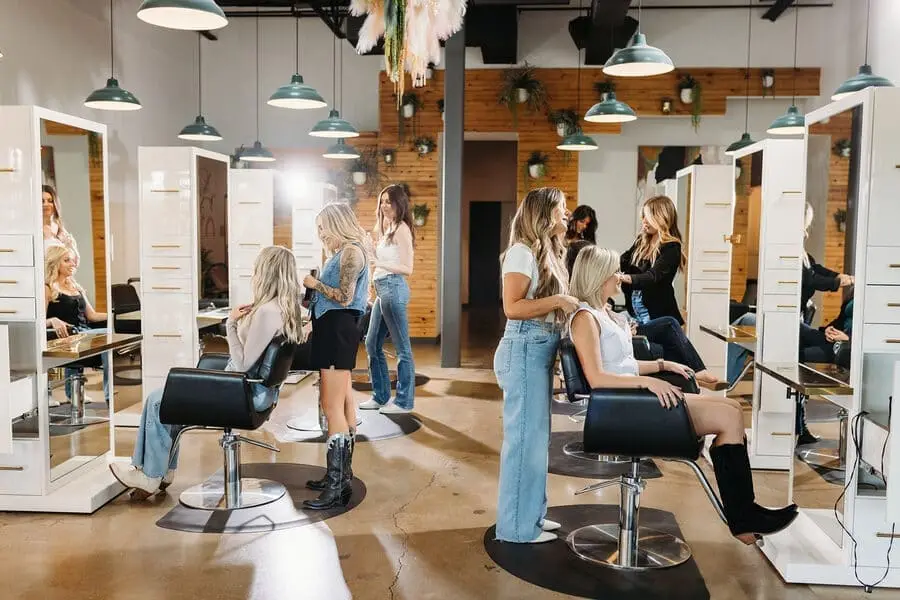
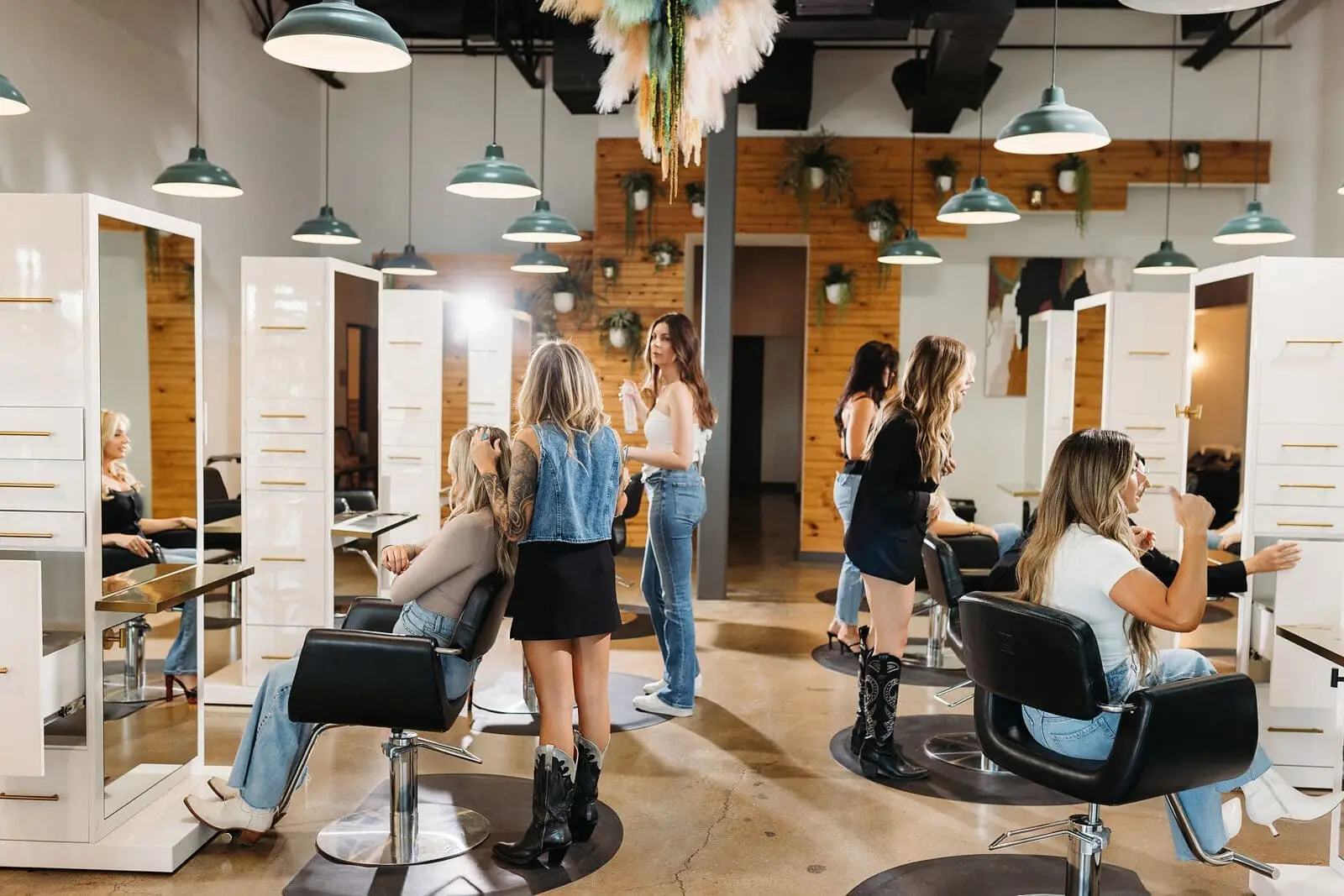
An open chair on a shared floor, with no walls and no door, works differently. When we opened TDLR’s current individual-license renewal page, it listed Class A Barber, Cosmetology Operator, Esthetician, Manicurist, Manicurist/Esthetician, Hair Weaving Specialist, Hair Weaving Specialist/Esthetician and Eyelash Extension Specialist as the license types it renews.
A standalone "booth rental license" isn’t on that list.
Older articles still describe one, but TDLR’s own current pages don’t, and your individual license is what covers an open chair today. If you’ve heard differently from a specific salon or suite company, ask them to point you to the TDLR page that says so.
Here’s how it all lines up...
| License | Who needs it | Fee | Valid for |
|---|---|---|---|
| Cosmetology Operator or Class A Barber | Every practicing beauty pro, employee, chair renter or suite renter | $50 | 2 years |
| Mini-Establishment | Anyone leasing an enclosed, walled room or suite inside a licensed salon | $70 | 2 years |
| Establishment ("gallery establishment") | The salon or building owner leasing space to renters | $78 | 2 years |
| Open chair, no walls | No separate TDLR license today; your individual license applies | — | — |
So figure out whether your space has walls, then apply for the license that matches on TDLR’s establishment license page.
Who holds the salon license when you’re renting inside a suite building?
The building itself always needs an establishment license, held by whoever owns it: $78, valid two years, per TDLR. TDLR calls a building that leases space out to renters a "gallery establishment," and that owner has to keep a list of every renter’s name and license number and stay responsible for shared areas like hallways and restrooms, per TDLR’s establishment page.
Ask to see that license before you sign, because a gallery owner who can’t produce a current establishment license is a real red flag. I’d put it right next to the questions my students already ask on a tour, like how long the lease runs and what’s actually included.
Inside that building, the individual room you rent may carry its own Mini-Establishment license, held by you or by the owner.
Either way, ask who holds it, and ask to see the number.
Do I need a sales tax permit, an LLC or an EIN?
You need a sales tax permit only if you sell retail product. Cosmetology and barbering services aren’t taxed in Texas, but selling shampoo, tools or product off a shelf is different, because that sale is taxable and it triggers a permit requirement from the Texas Comptroller, per its sales tax permit FAQ. The permit itself is free to apply for.
An LLC isn’t required by any state license to rent a chair, and a sole proprietorship is the simplest structure, with no extra filing.
Once you’re established, though, I recommend an LLC for the liability protection.
In my course, I tell my students to expect about $300 to file directly with the Texas Secretary of State, plus roughly $30 for a DBA if they want to operate under a business name. Those are my own course numbers rather than a state fee schedule, so confirm the current filing fee when you actually file.
An EIN is free from the IRS and is only required if you hire employees or choose to be taxed as a corporation. A sole proprietor with no employees can use their Social Security number instead, per the IRS.
What if I’m not sure which category I’m in?
You should call TDLR’s own license line, toll-free at (800) 803-9202, per tdlr.texas.gov, or ask the salon or suite building to show you their own current establishment license before you sign anything. This page tells you which licenses generally apply, but your exact situation, one specific building and one specific lease, is worth a five-minute call to confirm. If you get it wrong, the risk lands on you as the license holder, and the space you’re renting from doesn’t carry it.
Back on that Module 1 call, I gave my answer and still told the stylist to check on it and verify. So call TDLR yourself instead of taking a salon’s word for what’s required, since the salon isn’t the one who answers for your license.
And for anything past licensing, like a lease you don’t fully understand, a non-compete clause or splitting a suite with another pro, a real estate or business attorney reads a contract better than this page ever will.
TDLR answers what license you need, but it doesn’t answer what you’re agreeing to.
If you’re still weighing an open floor against a private suite beyond the licensing, I laid out the honest comparison in what is a Shared Workspace Salon™. And when you’re ready to map the whole move, how to go independent as a hairstylist lays out all eight steps in order.
Key takeaways
- Your own TDLR cosmetology or barbering license is the one non-negotiable, no matter what kind of space you rent.
- A door is the dividing line: an enclosed suite needs a second, $70 Mini-Establishment license, an open chair does not, per TDLR.
- The building always needs its own $78 establishment license, held by whoever owns it, per TDLR.
- An LLC is Bex’s own recommendation for liability protection, separate from any state licensing requirement.
- A sales tax permit only kicks in if you sell retail product. Services alone don’t trigger it.
Questions people ask
Do I need a license to rent a booth in a Texas salon?
Yes. You need your own active Texas cosmetology or barbering license from TDLR before you touch a paying client, whether you are on commission, renting an open chair, or leasing a suite. There is no separate state license for renting an open chair on a shared floor today; your individual license is what TDLR checks.
Do I need a different license for a private salon suite than for an open chair?
Yes, if the suite is an enclosed room or has a door. TDLR calls that a Mini-Establishment, and it needs its own license: $70, valid two years, on top of your individual license. An open chair on a shared floor, with no walls around it, does not need this second license.
Who holds the salon license in a suite building?
The building owner holds an establishment license (TDLR calls a building that leases space to renters a "gallery establishment"), $78, valid two years. The gallery owner keeps a list of every renter’s name and license number and is responsible for the shared areas. The Mini-Establishment license inside one suite can be held by either the renter or the gallery owner, per TDLR.
Do I need an LLC to rent a salon suite in Texas?
No state law requires it. A sole proprietorship is the simplest structure and needs no extra filing. Bex teaches an LLC as the recommended step once you are established, costing about $300 to file with the Texas Secretary of State, for the liability protection; that is her own course guidance rather than a licensing requirement.
Do I need a sales tax permit as an independent stylist in Texas?
Only if you sell taxable retail product, like shampoo or styling tools. Cosmetology and barbering services themselves are not taxable in Texas. If you do sell product, the Texas Comptroller’s sales and use tax permit is free to apply for.
What if I am not sure which license category I am in?
Call TDLR directly at (800) 803-9202, or ask the salon or suite building for a copy of its own establishment license before you sign anything. The wrong guess here is a compliance risk that lands on you rather than on them.
How this page was made
Written with AI from Bex’s teaching and her course. Every number checked against its source. Her team read every line before it went up. Open the card for what we checked and what we couldn’t.
How we verified this page
What we checked, what we couldn’t, and who read it.Reviewed by BexChecked September 23, 20268 sourcesReported with AI
The page
What this page is for
Tells a Texas beauty pro exactly which state licenses apply before they rent a chair or a suite: their own license, a possible Mini-Establishment license, and who holds the building’s establishment license.
Who we wrote it for
A licensed, or about-to-be-licensed, Texas hair, nail, esthetics or lash pro comparing an open chair to a private suite. Not for a state outside Texas, licensing rules vary by state and this page is Texas-only. Not for a cosmetology student with no TDLR license yet, get licensed first.
Our lens
bex+Co. is a Shared Workspace Salon™, an open floor, and we franchise it. We make money when a beauty pro becomes a member of an open floor, so we have a reason to make an open chair sound simple. We said the same thing about a private suite’s licensing either way: the rule is about the walls rather than about us.
Decisions we made
- Led with the one non-negotiable, your own TDLR license, before the door-or-no-door distinction, because that is the fact every reader needs regardless of which space they pick.
- Named the exact TDLR license types and current fees instead of the outdated "booth rental license" language that still circulates on other sites.
- Left out a specific certificate-of-occupancy answer rather than guess at a number that changes by city.
- Kept Bex’s LLC and DBA figures marked as her own course teaching, never presented as a state filing fee.
The work
How we researched it
- Opened TDLR’s own pages for the Cosmetology Operator license, the Establishment license, the Mini-Establishment FAQ, and the current individual license renewal list, live on 2026-09-23.
- Cross-checked the current individual license list against older trade-press claims of a standalone "booth rental license"; TDLR’s own renewal page lists no such category among current individual license types.
- Opened the Texas Comptroller’s sales tax permit FAQ live on 2026-09-23 to confirm when a permit is required.
- Pulled Bex’s own business-structure numbers (LLC and DBA filing costs) from Module 1 of her Beauty Empire Blueprint course, marked as her teaching rather than law.
What we could not verify
- The exact date TDLR stopped issuing a standalone booth rental (independent contractor) license could not be confirmed at a single TDLR announcement page; we verified its current absence from TDLR’s live individual-license list instead of citing a repeal date.
- A local certificate of occupancy or city permit may apply depending on the city and the building; that is set locally, not by TDLR, and this page does not name a number because it was not opened live for any one city.
- Bex’s $300 LLC and $30 DBA figures are her own course guidance to students, not a state fee schedule; the Texas Secretary of State’s own filing fee should be checked at the time you file.
Who wrote it
Written with AI from Bex’s teaching and her course. Every number checked against its source. Her team read every line before it went up.
Dates
Published September 23, 2026. Last checked September 23, 2026. Check again by December 23, 2026.
Changes and corrections
- None yet.
Sources
- Texas Department of Licensing and Regulation, Apply for a Cosmetology Operator License (opened 2026-09-23)
- Texas Department of Licensing and Regulation, Apply for a Barbering or Cosmetology Establishment License (opened 2026-09-23)
- Texas Department of Licensing and Regulation, FAQs About Barbering or Cosmetology Mini-Establishments (opened 2026-09-23)
- Texas Department of Licensing and Regulation, Renew Your Barbering or Cosmetology License, current individual license types (opened 2026-09-23)
- Texas Occupations Code, Title 9, Chapters 1602 (barbering) and 1603 (cosmetology)
- Texas Comptroller of Public Accounts, Sales Tax Permit FAQ (opened 2026-09-23)
- Internal Revenue Service, Do You Need an EIN, general federal guidance
- Bex Irvine, Beauty Empire Blueprint course: Module 1 training (business structure, LLC and DBA costs). Course content, members only.
100+ beauty pros chose freedom. There’s room for you.
Across 7 bex+Co.® floors, running their own businesses with other pros beside them.











Your move
You were never meant to do this alone.
Tell us which salon you’d like to work in. We’ll show you which bex+Co.® salons have space for a new member and which are full, then set up a tour if you want one.